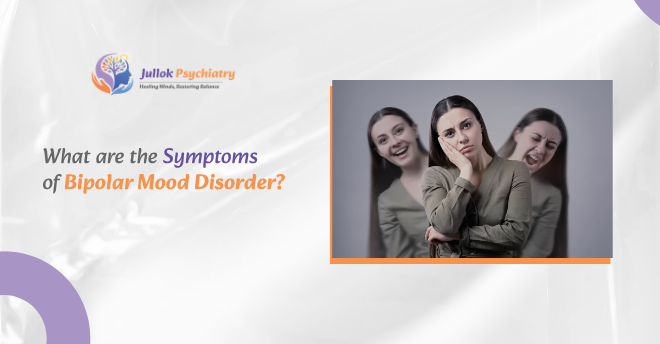
Mood swings happen to everyone. However, when these changes are severe, persistent and disruptive, it can be an indication of Bipolar disorder.
Bipolar is a profound psychiatric ailment that influences the mood, thoughts and actions of individuals.
At Jullok Psychiatry LLC, we offer evidence-based care for Bipolar disorder. Our focus is on stabilizing mood, reducing episodes and improving quality of life.
Understanding the early symptoms of bipolar disorder can help individuals get the support they need and improve their quality of life.
Below, we will discuss the main symptoms of bipolar mood disorder.
What is Bipolar Mood Disorder?
Bipolar mood disorder is when a person’s mood shifts between two main states:
- Mania (high mood), intense energy, excitement, or irritability
- Depression (low mood), deep sadness, fatigue, or loss of interest
These mood swings may last for days, weeks, or even longer. They do not just constitute common mood variations that everybody experiences.
What Are the Different Types of Bipolar?
There are three main types:
1. Bipolar I Disorder
- Includes severe manic episodes
- Depressive episodes may also occur
2. Bipolar II Disorder
Regular depressive episodes and the milder mania (hypomania)
3. Cyclothymic Disorder
Continuous mood swings, but not quite intense
What Are the Symptoms of Bipolar Mood Disorder?
The symptoms are generally divided into two main categories: manic symptoms and depressive symptoms.
Signs of a High Mood (Mania or Hypomania)
When a person is in a high mood state, they may:
- Feel very happy or unusually excited
- Talk very fast
- Sleep very little and still feel full of energy
- Have racing thoughts
- Feel more powerful than usual
- Start many projects at once
- Take risks without thinking much
- Spending too much money
- Get angry or annoyed very quickly
- Believe they can do things that are not realistic
This does not always look like “being happy.” Sometimes it looks like being restless, loud, or unable to slow down. In some cases, the person may seem out of control.
Signs of a Low Mood (Depression)
When a person is in a low mood state, they may:
- Feel sad, empty, or hopeless
- Lose interest in things they once liked
- Sleep too much or too little
- Feel tired all the time
- Find it hard to focus
- Move or speak more slowly
- Eat too much or too little
- Feel guilty or worthless
- Pull away from friends and family
- Have thoughts about death or hurting themselves
These symptoms can make daily life feel very hard. A person may not want to get out of bed, go to work, or talk to others.
Mixed Episodes
Some people experience both manic and depressive symptoms at the same time.
They may feel:
- Restless but hopeless
- Energetic but deeply sad
This state can be especially distressing and increases the risk of harmful behavior. Immediate support is important.
At Jullok Psychiatry LLC, we recognize how deeply these symptoms affect daily life.
What Do Bipolar Episodes Look Like?
An episode is a period when symptoms are intense.
Manic Episode:
- Talking excessively
- Sleeping very little
- Acting impulsively
- Feeling overly powerful
Depressive Episode:
- Staying in bed for long periods
- Avoiding social interaction
- Struggling with daily tasks
- Persistent sadness
Episodes may come and go over time.
What Age Does Bipolar Develop
Symptoms often begin in:
- Late teenage years
- Early adulthood
However, bipolar disorder can develop at any age. Early signs may be mild but can worsen without treatment.
Bipolar Symptoms in Teens and Adults
Signs of bipolar disorder in teens may not look the same as in adults. A youth can appear extremely bitter, sleepless, disposition too violent, or emotionally unbalanced. They may also do poorly in school or have problems with friends.
In adults, symptoms might be more readily observed, yet they still might not be noticed. It takes years before some adults are given the diagnosis. This is the reason why close psychiatric attention is so much needed.
At Jullok Psychiatry LLC, we do not just concentrate on symptoms. We listen closely. We consider the entire individual. Our treatment plans are tailored to real life and not a plan that fits all.
How to Know If Your Spouse Is Bipolar
You may notice:
- Extreme mood swings
- Periods of high energy followed by deep lows
- Impulsive or risky behavior
- Emotional unpredictability
A professional diagnosis is necessary for confirmation.
Why It Is Important to Notice Symptoms Early
Early symptoms of bipolar matter. Recognizing symptoms early can:
- Reduce the severity of mood swings
- Prevent serious episodes
- Improve relationships and daily functioning
- Help build effective coping strategies
Untreated bipolar disorder may lead to serious mood swings, challenges at work or school and relationship challenges. This is why the early support is so crucial.
The condition may be more difficult to deal with due to the neglect of symptoms.
When to Get Help
You should seek professional help if your mood changes:
- Last for long periods
- Keep returning
- Interfere with daily life
- Lead to risky or harmful behavior
- Induce great sorrow or suffering
Call for help if you have suicidal thoughts.
Treatment for Bipolar Disorder
Bipolar disorder is manageable with the right care.
Medication
Assists in understanding emotions and developing coping strategies.
Therapy
Helps in emotional perception and coping mechanisms.
Lifestyle Changes
- Regular sleep routine
- Healthy diet
- Physical activity
- Stress management
Ongoing Care
Follow-ups should be regular in terms of long-term stability.
At Jullok Psychiatry LLC, care is centered on the individual. Our group realizes that every experience of bipolar disorder is unique.
We get time to listen and get to know about the needs of every patient. The treatment plans are designed on the basis of personal objectives, lifestyle and mental health records.
Our services focus on:
- Stabilizing mood
- Reducing the frequency of episodes
- Improving daily life and well-being
We provide safe, respectful care.
Supporting Someone with Bipolar Disorder
You can help by:
- Listening without judgment
- Encouraging professional help
- Being patient during mood changes
- Learning about the condition
- Offering practical support when needed
Even small and consistent assistance can create an impact.
Final Thoughts
Bipolar mood disorder is a severe condition that can be treated. The first step is to know the symptoms. When you know the signs, then you can do something early.
Do not delay if you or a loved one is experiencing early bipolar signs. Childhood attention can be significant.
At Jullok Psychiatry LLC, you will find a safe place where you are heard and supported. Our group is willing to assist you in being educated about your symptoms and assist you in living a stable and healthy life.
Call us today and make the first step in feeling better.
FAQs
Is bipolar a personality disorder?
No. It is a mood disorder, not a personality disorder.
Do bipolar people know they are bipolar?
Some do, especially after diagnosis. During mania, awareness may be low.
Can bipolar be caused by trauma?
Trauma does not directly cause bipolar disorder, but can trigger or worsen symptoms.